
Water Damage Restoration Warren
Water in your Warren basement does not wait for morning, and neither do we. Our crew pulls the water out, dries the structure, and handles the whole water damage restoration from that first call.
Water damage restoration handled by our own crew
 by our own
  crew
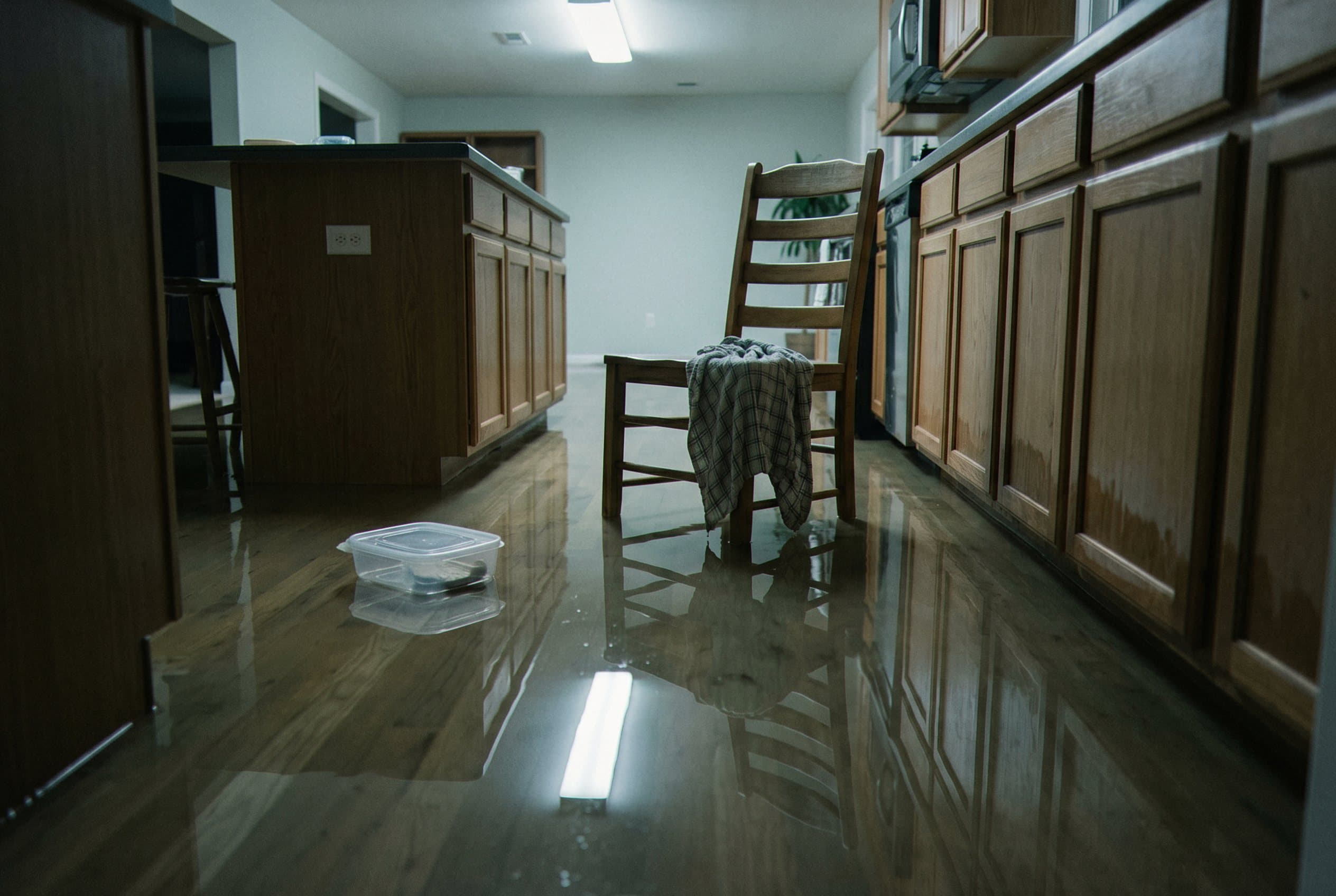
crewA supply line splits at two in the morning. The sound wakes you, and by the time you get downstairs the water is past the bottom stair. That is how most Warren calls start. You reach our crew, you tell us what you see, and the work starts that same day. Emergency Water Removal comes first, always. We pull the standing water out, then trace the path it took through the house. Water never stays put. It runs along joists, slips under trim, and soaks the carpet pad long before it shows on a wall. The reason we move fast is the drying window. The EPA advises drying wet areas inside 24 to 48 hours to head off mold. The CDC goes further in its flood guidance. If a material stayed wet past that window, treat it as moldy. So every hour counts, and Emergency Water Removal is how we buy the rest of them back.
We work in Macomb County, and Warren is home ground for us. Most of this city went up after the war, built for the people who made cars on Mound Road and at the Tech Center. Those homes are brick ranches and bungalows, and nearly all of them sit over a full basement. The basement is where the water ends up. In January a line in a cold outside wall can freeze, split, and empty into a finished rec room before dawn. In March the melt runs off frozen ground and pushes at the block walls. In July a hard storm drops two inches in an hour and the floor drain backs up. Different causes, same wet basement. Our water damage restoration covers all of it, from the first pump to the last coat of paint.
You should never have to guess what happens next in your own house. Our work runs in an order, and we say that order out loud before we start. We stop the source, or we confirm it is stopped. We read the moisture and mark how far the water traveled. Water Extraction pulls the bulk of it out. Then the drying gear goes in, aimed at the wet spots we mapped, not just dropped in the middle of the room. We check the numbers every day. When the readings match the dry standard for your house, the gear comes out and the repairs go in. You get told where we are in that order every time we come by. No runaround, and no vague answers about when the fans finally leave.
Water damage gets worse while it waits, and that is not a sales line. It is how the materials behave. Drywall, insulation, carpet pad, and subfloor all drink on contact. They hold what they take, and they lose strength the longer they hold it. Paint bubbles. Trim swells and pulls off the wall. A subfloor that stayed wet for a week can cup the hardwood above it for good. The 24 to 48 hour window in the EPA guidance marks the point where mold risk goes from possible to likely. Past that line the question changes. It stops being whether a material can dry, and it starts being how much of it has to come out. That is why we would rather come out at three in the morning than at noon.
Before any cleanup starts we name the water, because the category sets the method. The ANSI/IICRC S500 standard sorts it into three. Category 1 is clean water from a sanitary source, like a split supply line or a tub left running. Category 2 is gray water. It is dirty enough to make you sick, and it comes from a dishwasher, the drain hose on a washer, seepage through a wall, or a sump pump that quit. Category 3 is black water, and it can carry agents that cause real harm. Sewage pushing back up a floor drain is the common one here. Here is the part plenty of crews get wrong. Storm water is not automatically Category 3. The look we take at the house decides the category, and the category decides the method. Sewage Cleanup runs by a different set of rules than a clean supply line.
The calls we take most often in Warren fall into a short list. Pipes that froze and split in an outside wall, usually in a house built in the fifties. Sewer backups that come up through the basement floor drain during a hard rain, which is a known sore spot across older Macomb County lines. Water heaters that let go after fifteen quiet years. Washers that fail at the hose. Sump pumps that pick the worst night to quit. Storm water in a finished basement off Van Dyke or Ryan. Ice dams that push melt back under the shingles and drop it into a bedroom ceiling. Almost every one of those homes has a basement, which is why so much of our work here happens below grade, on a concrete floor, with a hose running out the back door. Water damage restoration in a Warren basement is its own kind of work, and we do it most weeks of the year.
Here is what our arrival looks like from your side of the door. A truck pulls up. Two of us come in with boots covered, and we ask you to walk us to the water. We look, we listen to what you noticed and when, and we put a meter on a wall while you are still talking. Inside about twenty minutes you know how far the water went, what is coming out of the house, and what the first day looks like. Then the hoses come in. Nobody stands in your kitchen writing a proposal while the basement fills. The work starts while we talk, and the paperwork catches up after.
Paperwork is half of a water claim, and it starts before we pull in. Take photos and video of the damage before anything moves. Keep the ruined items until your adjuster has seen them. On our end we shoot the same rooms before, during, and after, and we log the moisture readings every day the gear runs. When we leave you get the whole file, the scope and the photos and the numbers. A scope with daily readings behind it tends to get approved. One without them tends to get argued over. One honest note on coverage. Sudden and accidental water damage falls under most home policies, and rising flood water usually does not. Your policy decides that, not us. What we can do is hand your adjuster a clean record of what happened and what it took to fix.
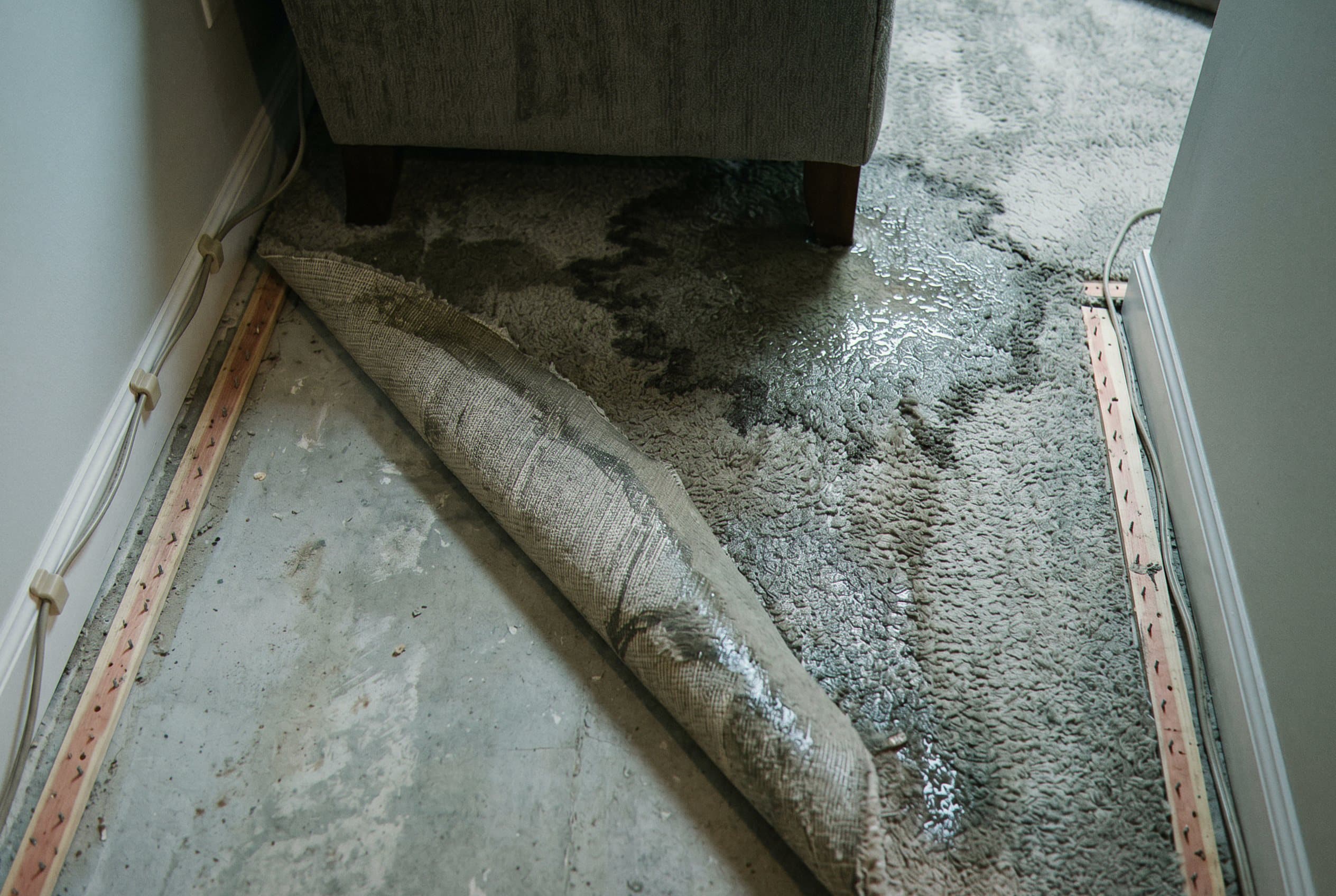
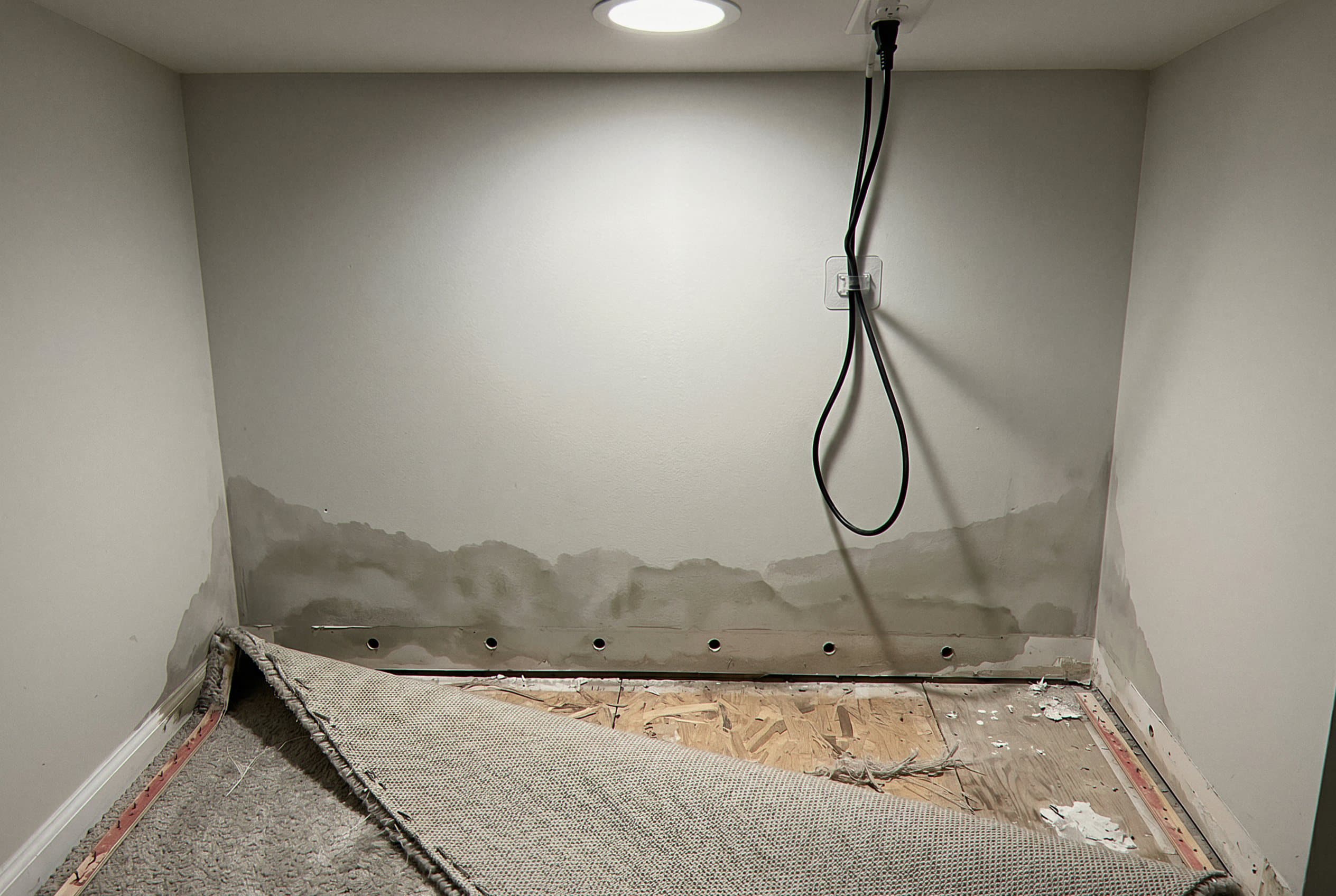
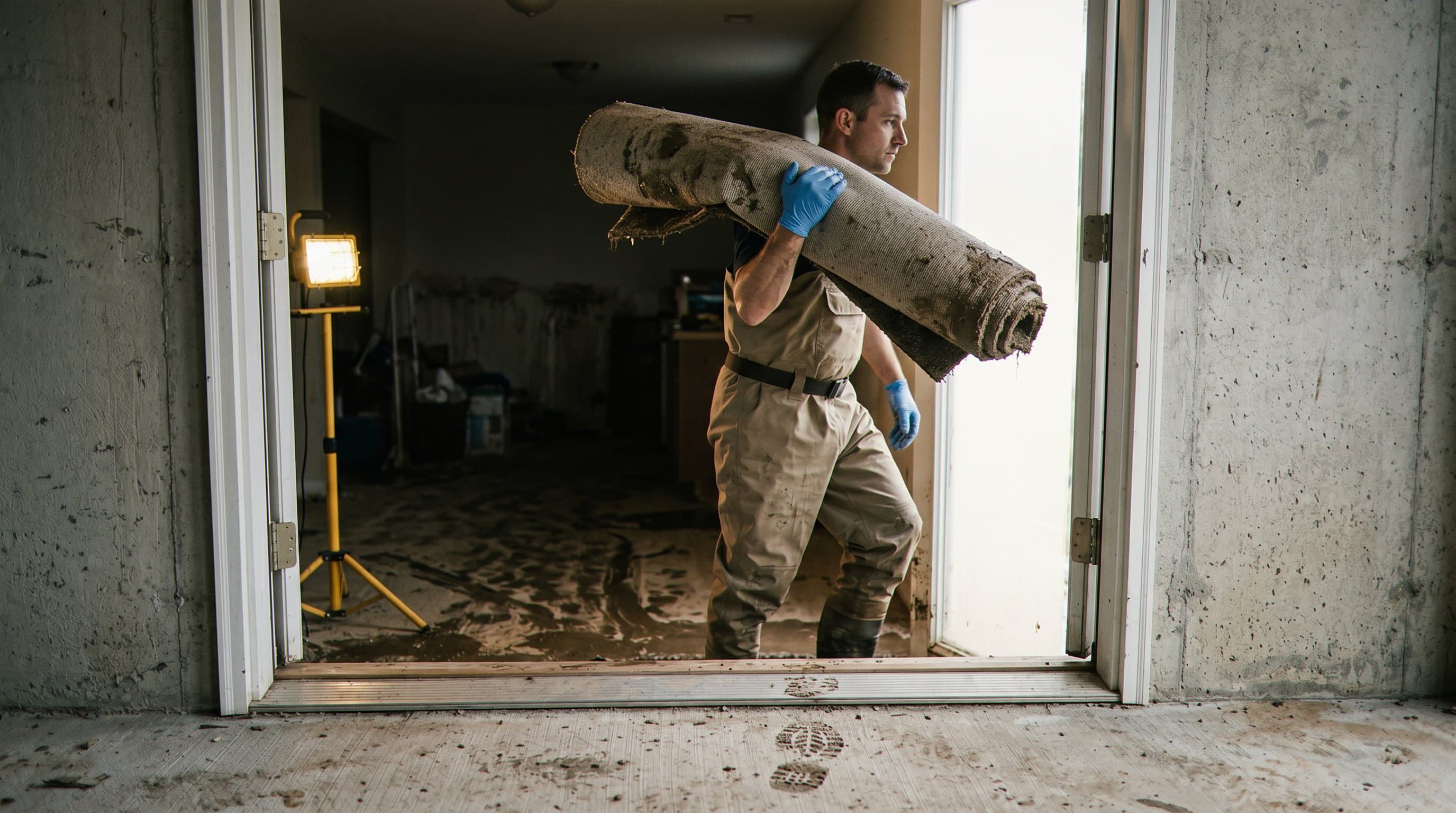
Water Damage Restoration Warren in Warren
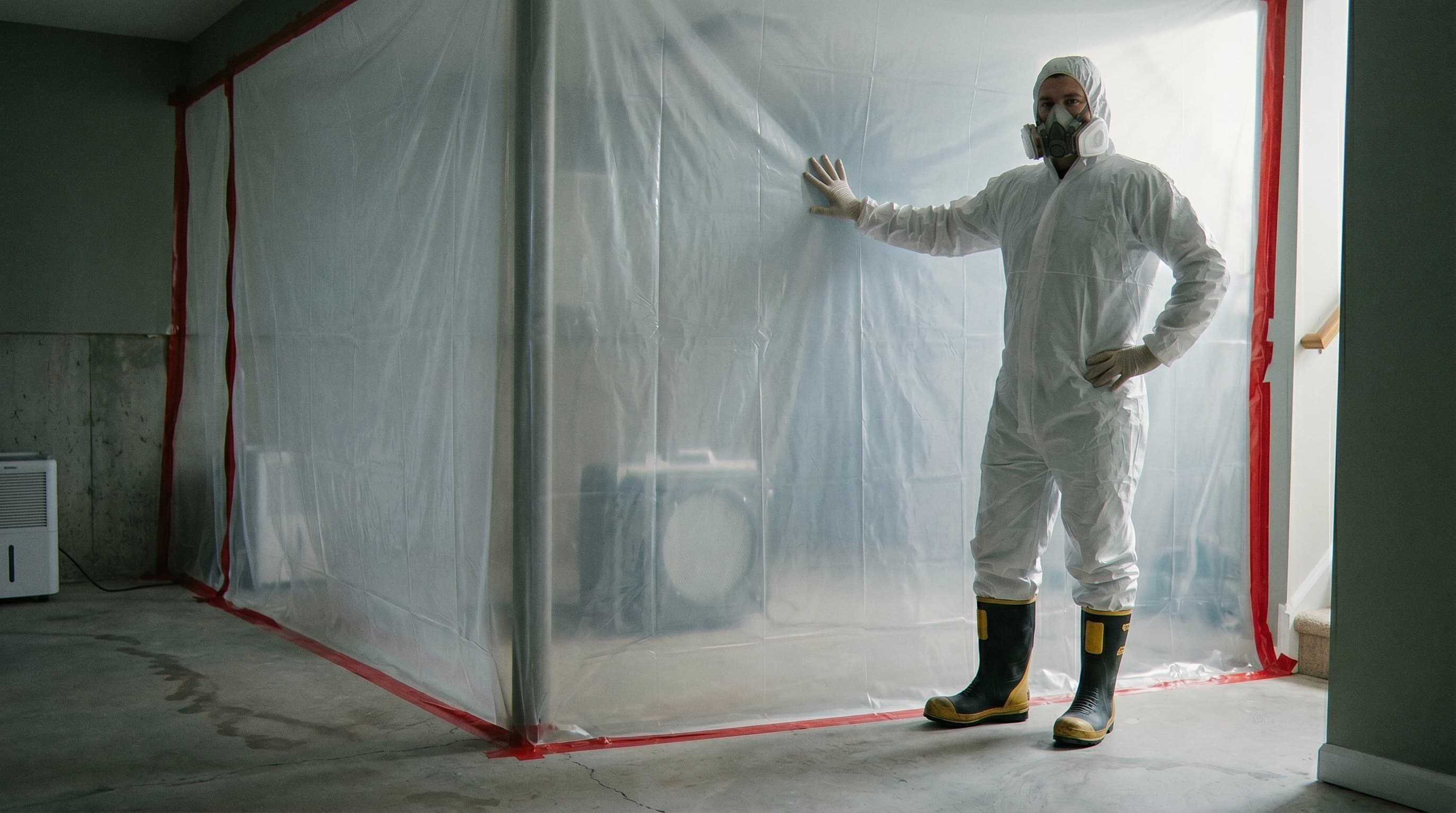
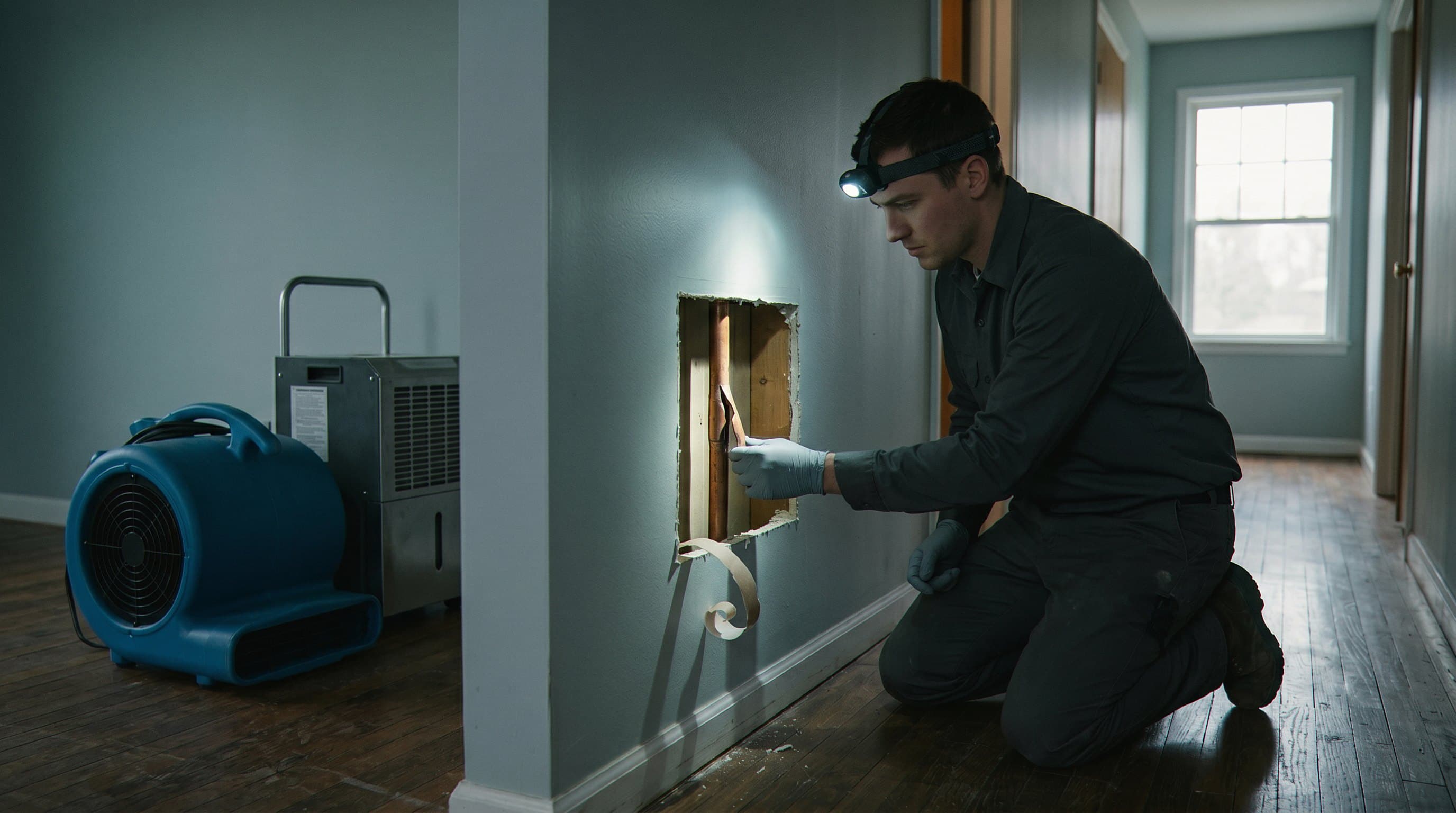
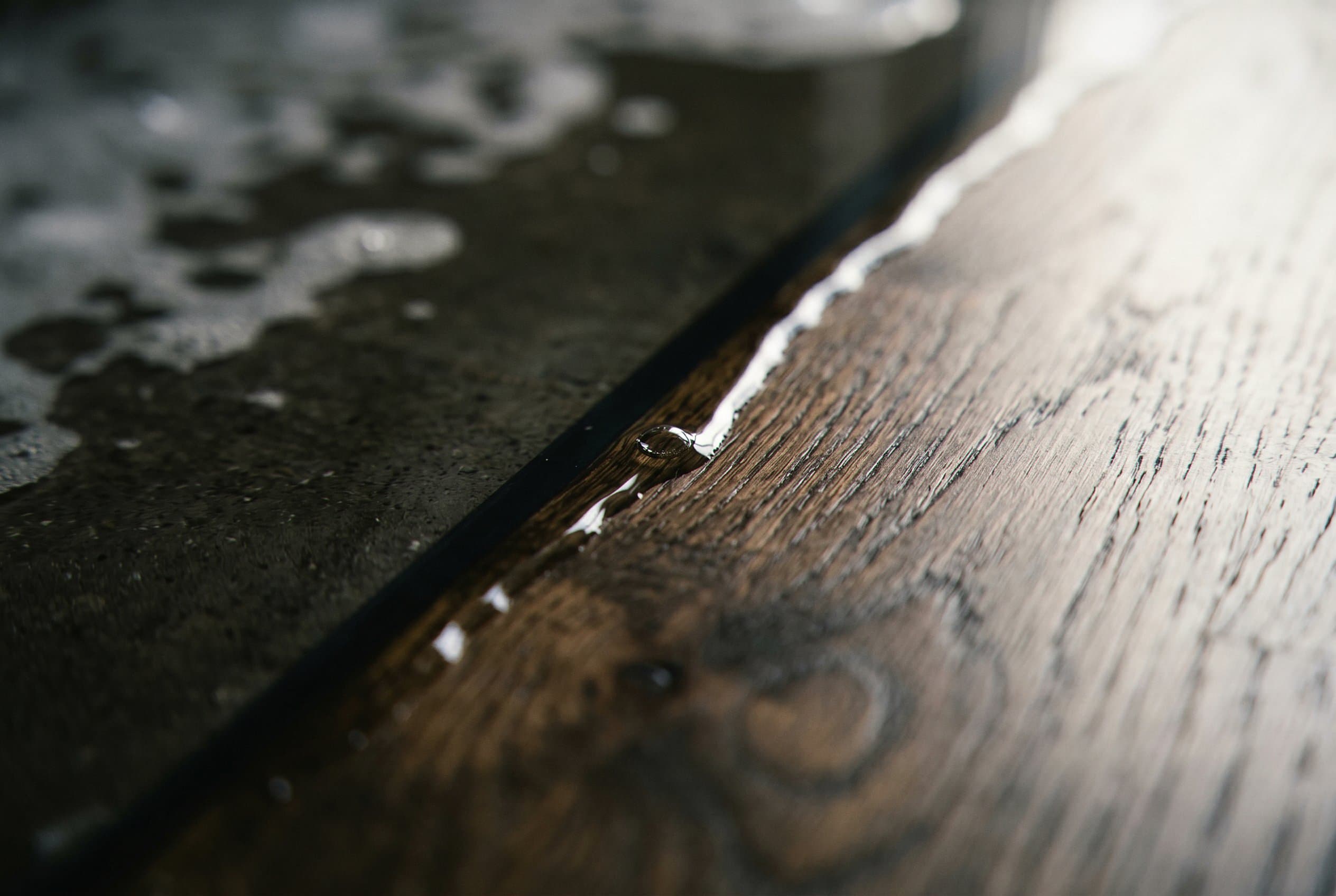
Emergency Water Removal
Real water damage restoration is more than a loud fan in a wet room. The water you can see is the easy half. The water you cannot see is what rots a joist and feeds mold six weeks later. So we measure instead of guess. A moisture meter finds the wet line inside a wall. A thermal camera shows where the cool wet patch spreads under a floor. We mark those spots with tape and write the numbers down. Then we read the same spots every day until they come back dry. That is the difference between a room that feels dry and a room that is dry. Feeling dry is a surface. Being dry is a number you can check against the same material in a part of the house the water never reached.
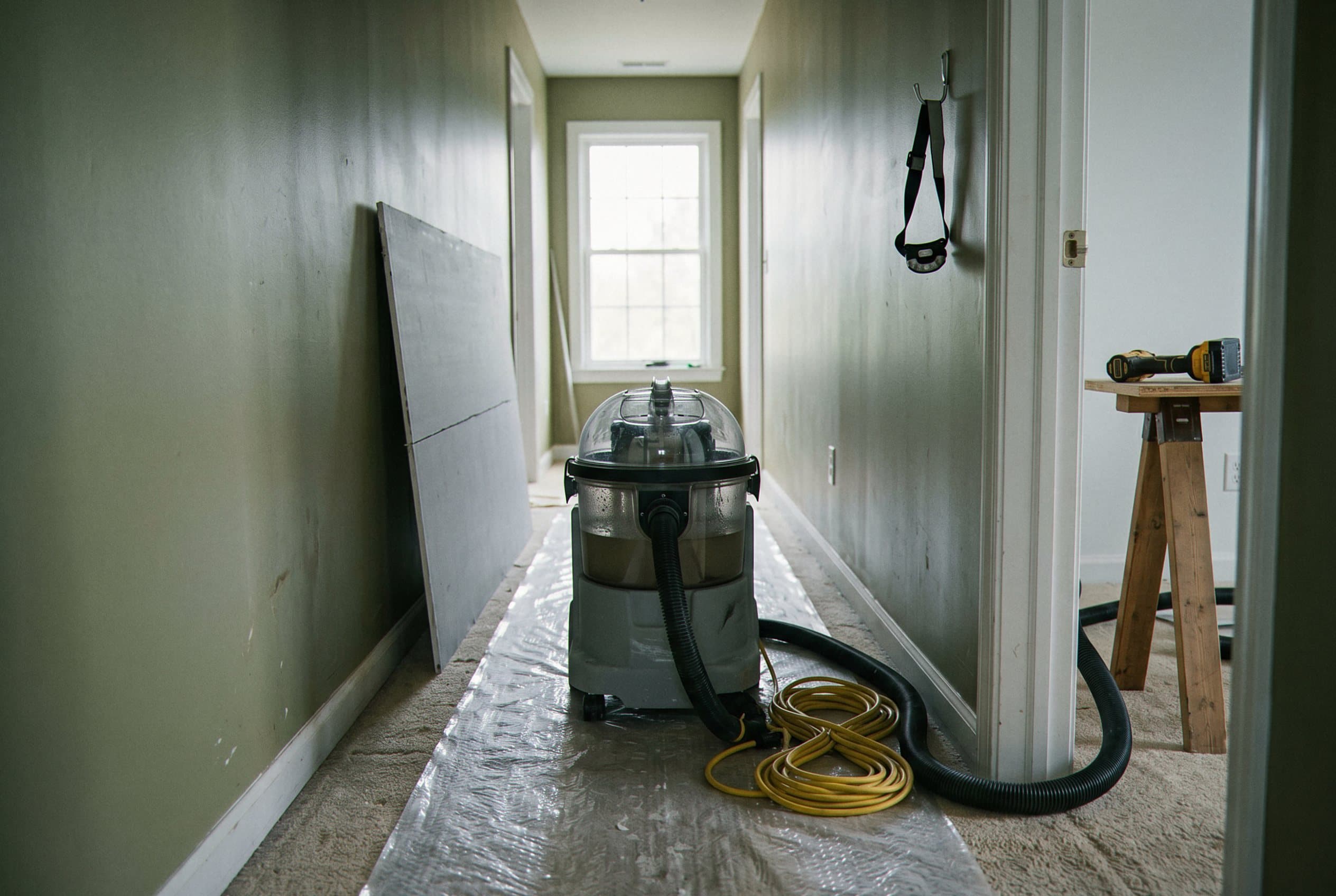
Water Extraction
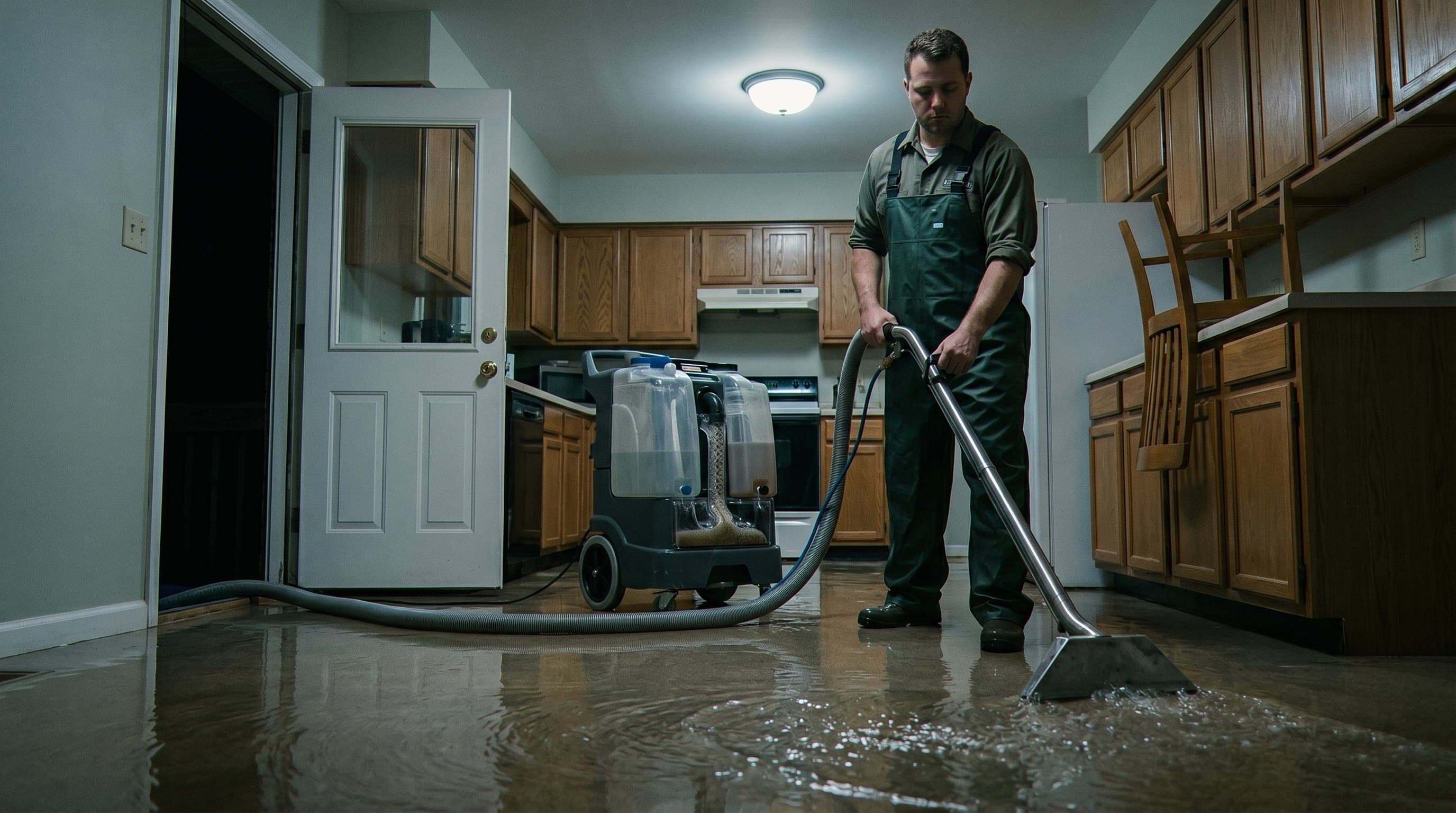
Water Extraction pulls the bulk of the water out first, and it does more work than people expect. Every gallon we lift with a pump is a gallon the fans never have to move as vapor. That saves days. Then comes the part most crews rush. Structural Drying & Dehumidification dries the bones of the house, the studs and joists and the concrete floor. Air movers go where the wet is, aimed low across the surface, and we move them as the room gives up its water. Dehumidifiers pull that moisture out of the air so it does not just land somewhere else in the house. We adjust the setup daily based on the readings. A Warren basement with block walls dries differently than an upstairs bedroom, and the gear should reflect that.
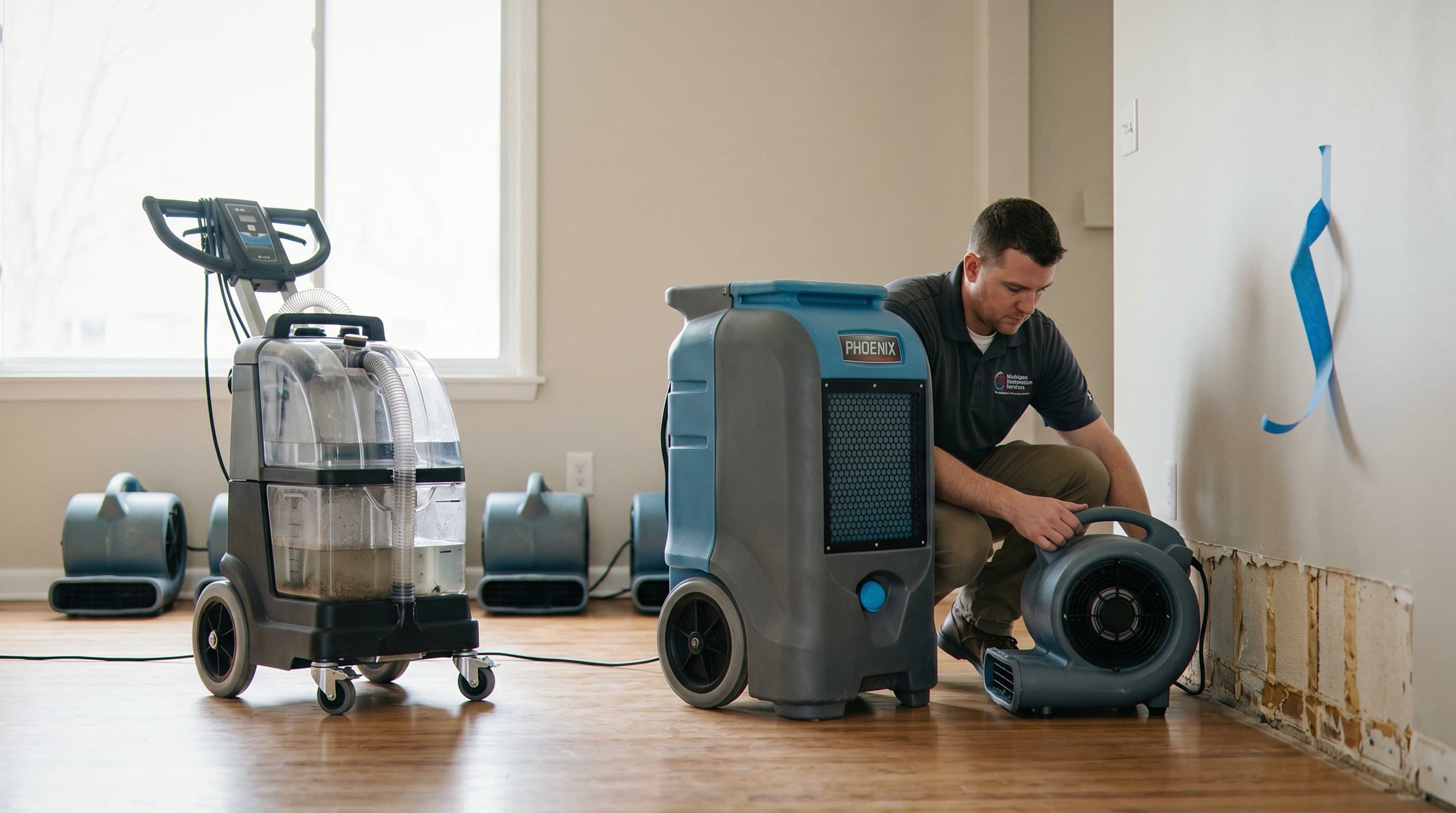
Structural Drying & Dehumidification
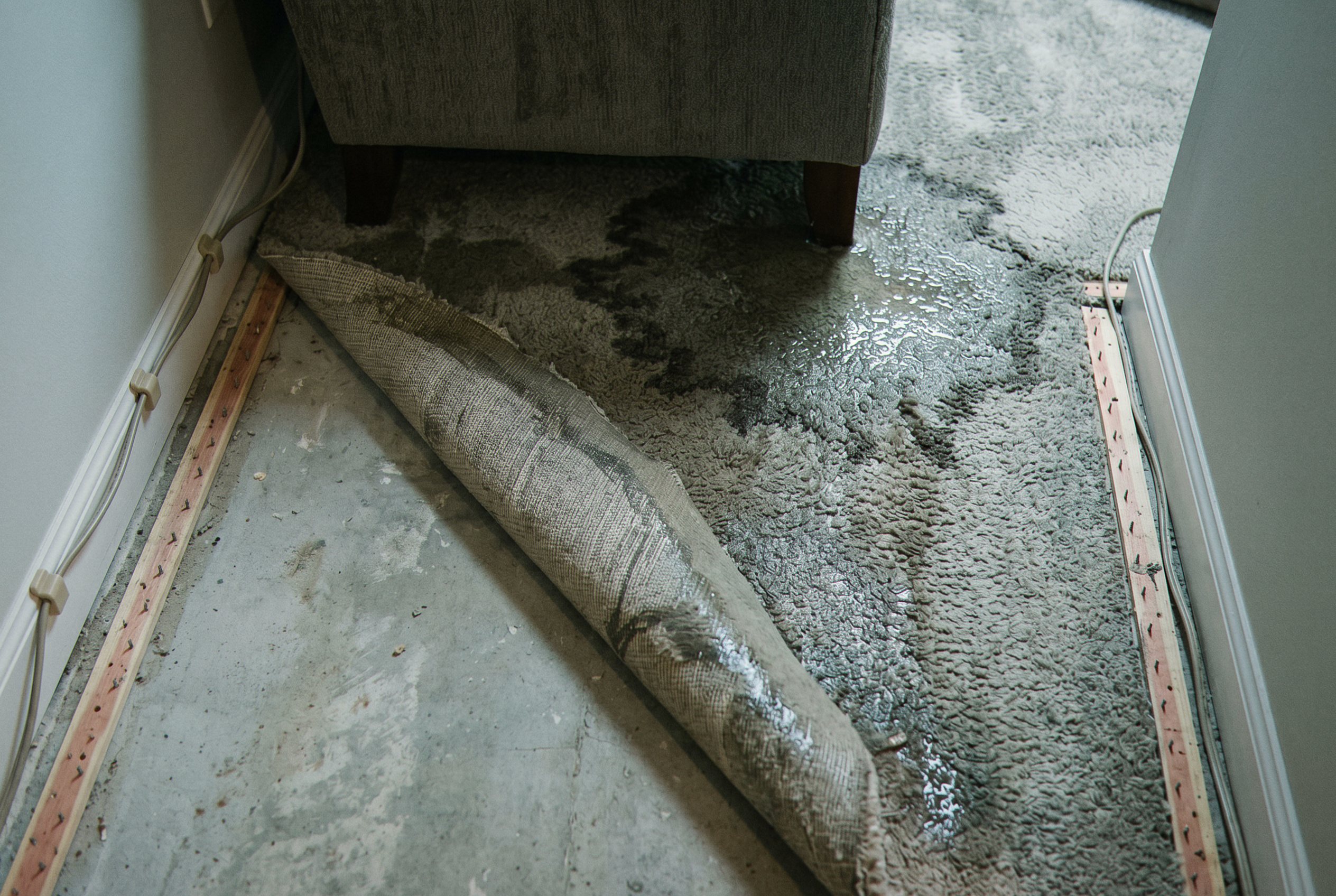
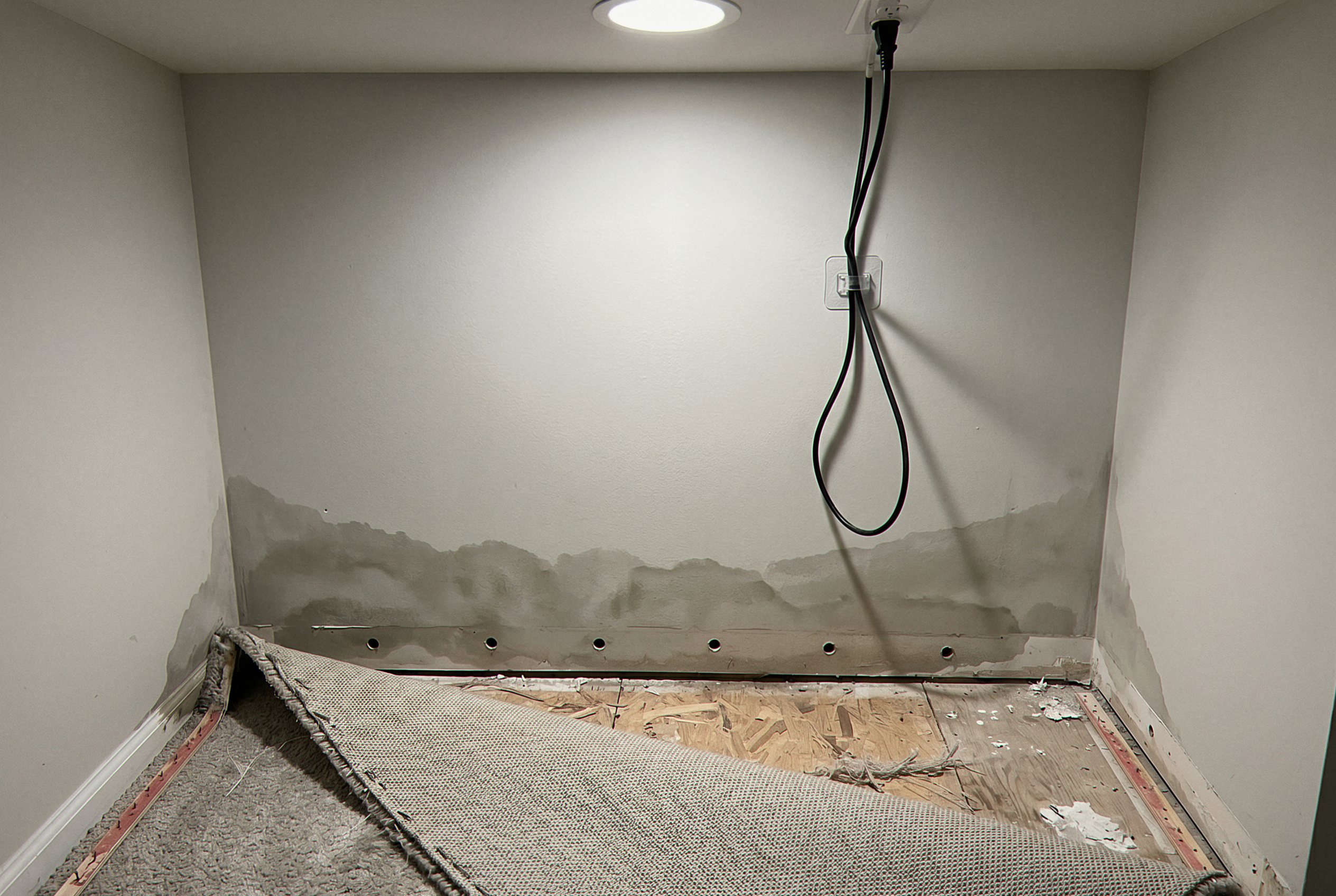
Flood Damage Cleanup asks for more than a mop and a shop vac. Flood water is dirty water. It carries mud, bacteria, lawn chemicals, and whatever the storm dragged down the street before it found your window well. So we clean and sanitize every surface it touched, the way the IICRC lays out for water in that class. Soaked carpet and pad come out. Drywall gets cut above the water line, because the paper wicks moisture higher than the stain shows. Insulation in a wet wall cavity comes out too, since it holds water like a sponge and dries slower than anything around it. Contents get sorted into what can be cleaned and what cannot, and we tell you which is which. Done right, Flood Damage Cleanup leaves a room that is safe to live in, not just a room that stopped dripping.
How our water damage restoration works
Rapid Response
Our line is open 24/7, and every water call gets treated as an emergency. We take the details, tell you what to do before we arrive, and get a crew moving toward your Warren address.
Assess & Extract
On site we map the moisture with meters and infrared thermal imaging, so we know everywhere the water traveled — not just where it shows. Then pumps and extractors pull the standing water out, lowest points first.
Dry & Monitor
Air movers and dehumidifiers dry the structure itself while we log moisture readings every day. The gear stays until the wet areas return to the documented dry standard — not until the floor feels dry.
Repair & Restore
With the structure verified dry, we rebuild what the water ruined — drywall, trim, flooring, paint — and hand the room back to you in pre-loss condition, with the full documentation file.
Need water damage restoration in Warren right now?
Tell us what is going on at your Warren home and we will walk you through the options. One call or one short form is all it takes.
Call (586) 250-0785Make your inquiry
Looking for help at a Warren home? Send the short form and we get back fast during open hours: .
Start the formQuestions Warren families ask
Straight answers first. If yours is not here, call (586) 250-0785 and ask.
How fast can you get to my Warren home?
What should I do before the crew arrives?
Do you work with my insurance?
Will there be mold?
Is the water contaminated?
How long does drying take?
Need water damage restoration in Warren right now?
Tell us what is going on at your Warren home and we will walk you through the options. One call or one short form is all it takes.
Call (586) 250-0785Make your inquiry
Looking for help at a Warren home? Send the short form and we get back fast during open hours: .
Start the form