
Water Leak Detection · Warren

Water Leak Detection in Warren, MI from a Local Crew

We track a hidden leak to its source fast, then mark every wet spot so the repair can start the same day.

Free Quote

Free Water Leak Detection quote.

We reply within 1 business hour. No spam, ever.

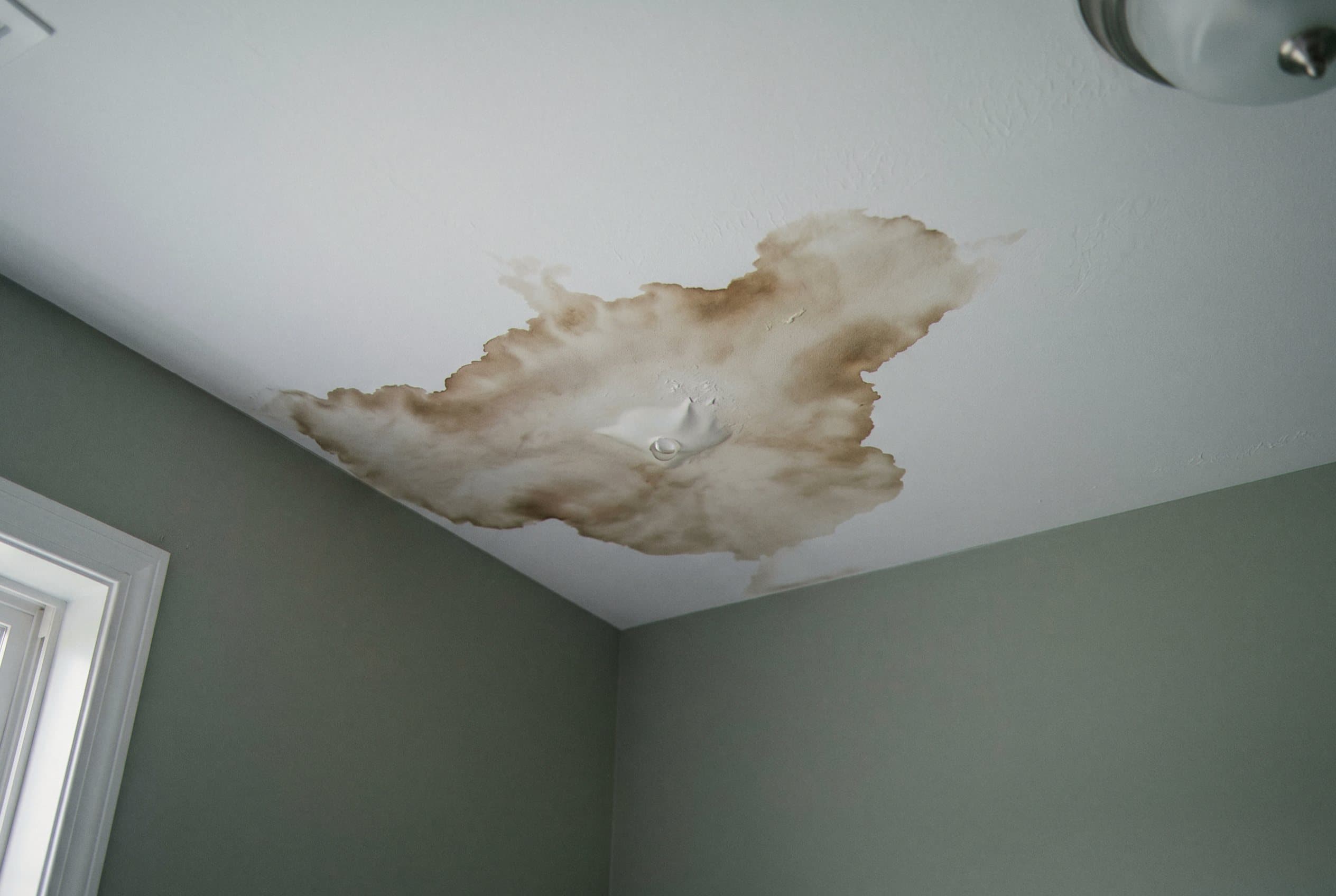
Drywall wet staining from hidden water leak
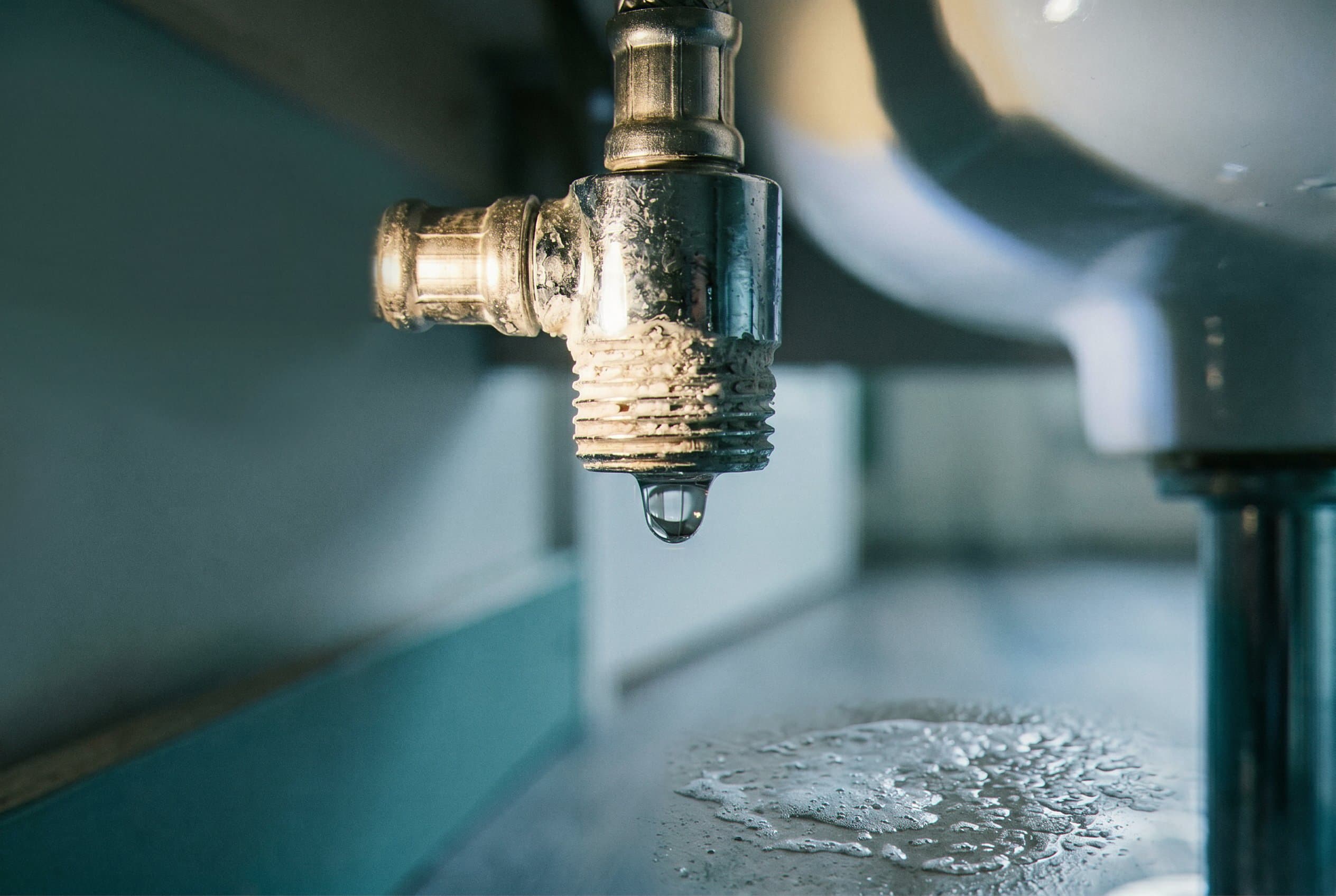
Floor stain indicating hidden water location
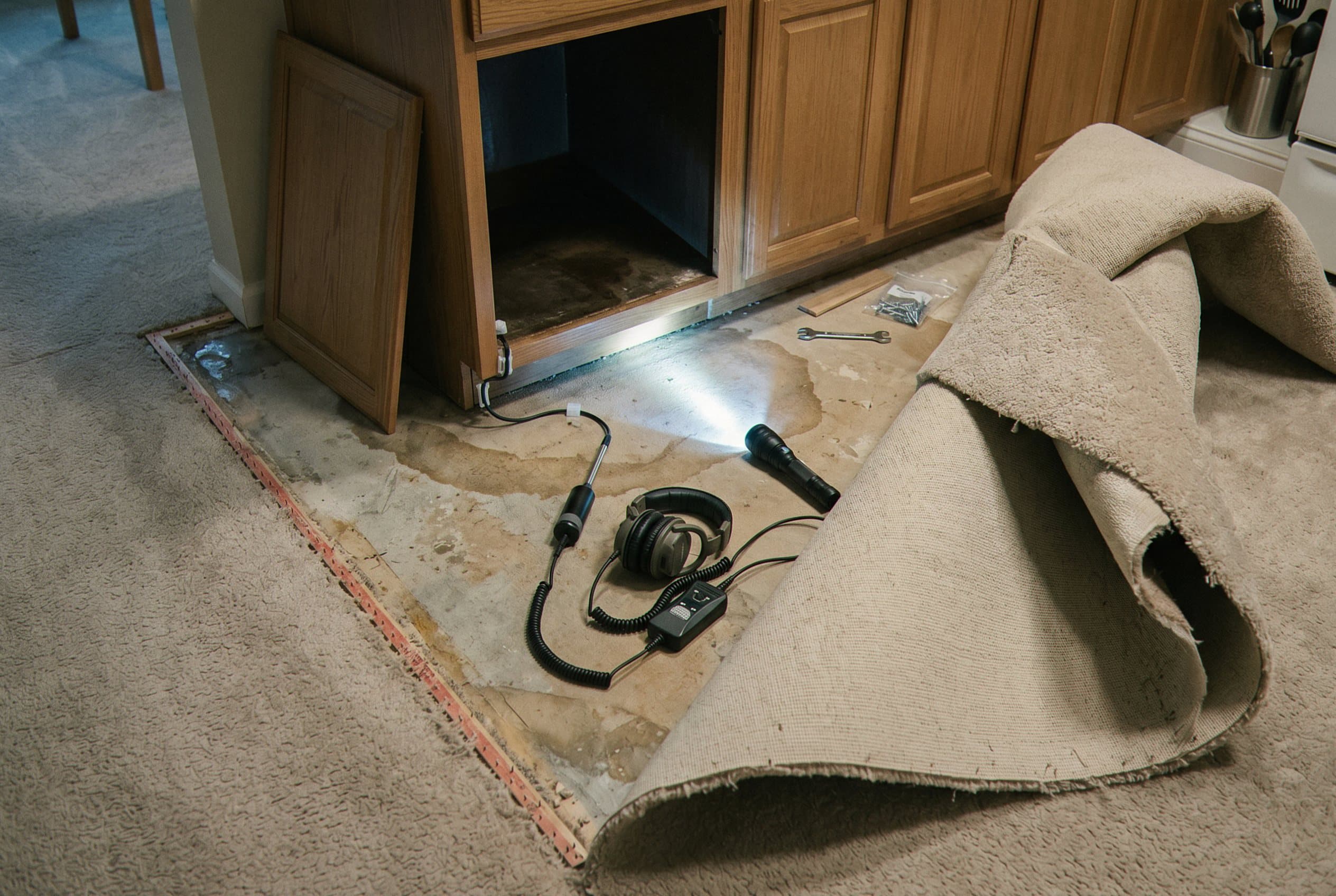
Moisture meter acoustic leak detection tools
What we do

Find the Leak Before It Damages Your Home

A leak you cannot see is the one that costs you the most. It can run behind a wall or under the slab for weeks while nothing looks wrong, quietly soaking the wood and feeding the mold that always follows close behind. Then the small signs start. A warm patch on the floor, a water bill that climbs for no reason, a damp corner of carpet, a faint musty smell that will not leave. By then the framing below has often gone soft. We come out, rule out the easy suspects, and listen for water moving under pressure inside the pipes. We pin the exact spot. Once we find the leak, our drying crew pulls the moisture back out of your home.

We start at the meter and a map of your plumbing. If the main line holds steady pressure, the leak hides somewhere past it, so we shut each zone one at a time until the needle stops drifting. Then acoustic gear and a thermal camera narrow the trouble down to a single foot of pipe or slab. A trained ear hears the leak long before the floor has to come up. We mark it, take photos, and walk you through what we found before we touch anything. No blind guessing here. We will not tear open half the house to chase one slow drip. You get the answer first, then the plan, then the repair.

  • We pin the leak to one spot before any wall or floor comes open.
  • Acoustic and thermal tools catch hidden water that a plain visual check always misses.
  • Fast response across Warren and the rest of Macomb County.
  • You see photos and a clear map of every wet area before work begins.
  • We trace supply, drain, and slab leaks buried deep under the floor.
Find the leak first, fix it once, and stop paying for water you never used.

We live and work in Warren, so your call reaches the same crew that pulls up to your curb. We know the older homes near Mound Road where copper supply lines wear thin over the years. We also know the newer builds where a slab line can fail while the house is still young. When you reach us, you talk to the people who do the work. We answer in plain words, give you a straight read on what is wrong, and tell you what the repair will take before it starts. No script, no runaround, and no pressure to spend on a wall that does not need to open.

A small leak today turns into a torn open wall next month, and a far bigger repair with it. Call us now and we will trace the source, show you the damage, and start the drying the same day. One call moves it forward.
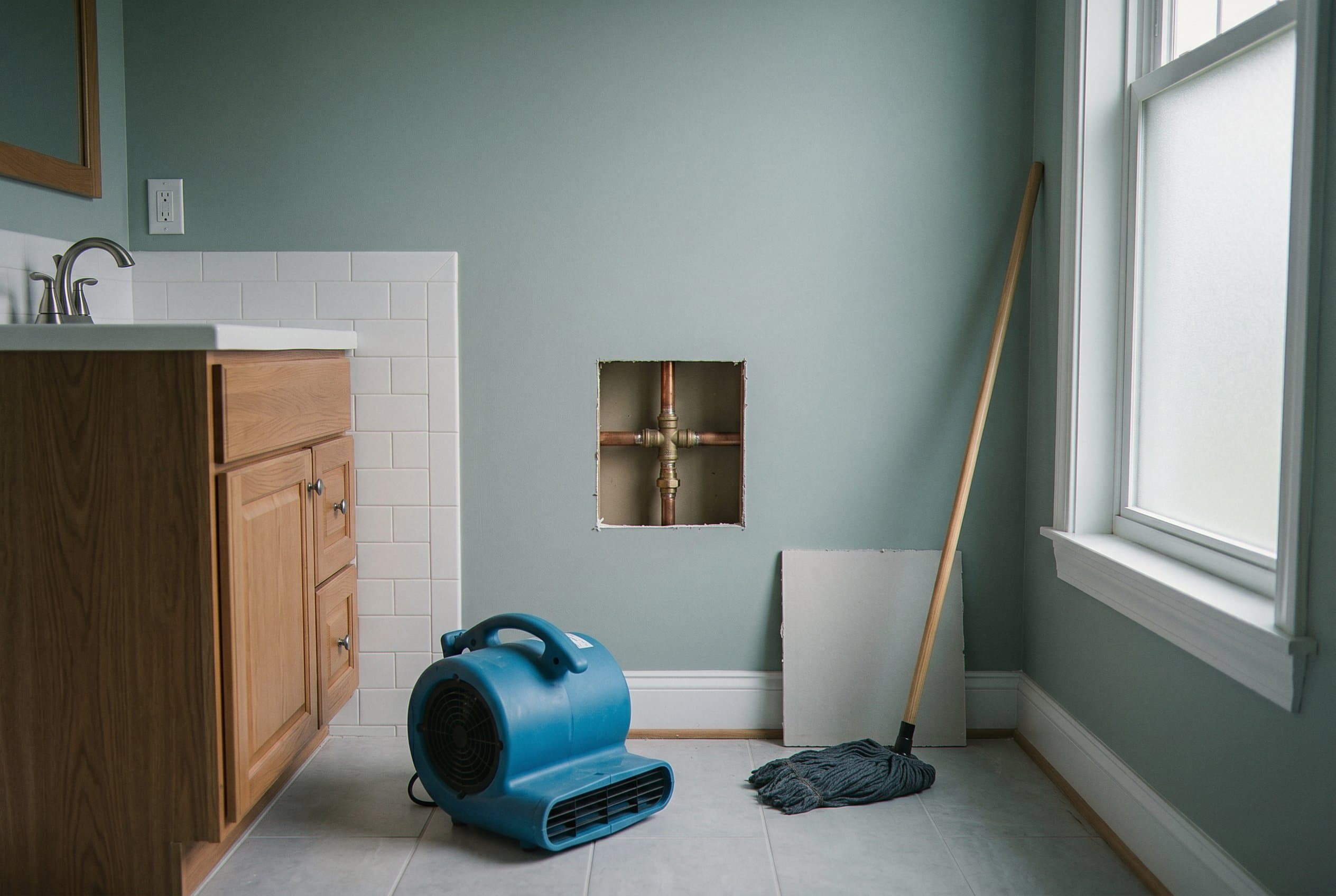
Materials

The gear we bring to find a hidden leak

Leak work runs on gear that a walk through the house can never match. We start with a gauge on the main line so we can watch the pressure hold or drift over a set stretch of time. Then come the acoustic heads. They pick up the thin hiss of water pushing through a pinhole under six inches of concrete, a sound your ear will never catch on its own. A thermal camera reads the warm trail a hot line leaves across the floor, and the cold patch where a cold line weeps behind plaster. A pipe locator maps the run so we know where the copper really goes instead of guessing from the fixture above it. Moisture meters and a small camera on a cable finish the kit. Each tool answers one narrow question. Put together, they take a whole house and shrink it down to one spot on one wall.

We do not sell you gadgets or hand you a meter and wish you luck. We bring the acoustic gear, the thermal cameras, and the pressure tools to your home, run them ourselves, and pin the leak before any wall comes open. What matters to you is a clear answer and the exact spot, not a guess that turns into a room you have to tear open. Warren throws us a mix. The older brick ranches off Van Dyke run copper that thins at the elbows after decades of city water. Newer builds out toward Twelve Mile put supply lines in the slab, where one weep spot can warm a whole strip of tile before anybody notices. We match the tool to the house, and we bring more than one, so a stubborn leak has nowhere left to hide. If the water has already soaked the floor or the framing, we tell you straight and set up the drying that has to follow.

  • A pressure gauge on the main line to show whether it holds or drifts
  • Acoustic heads tuned to water escaping under concrete and plaster
  • Thermal cameras that read warm and cold trails through floors and walls
  • Pipe locators, moisture meters, and a camera on a cable for tight runs
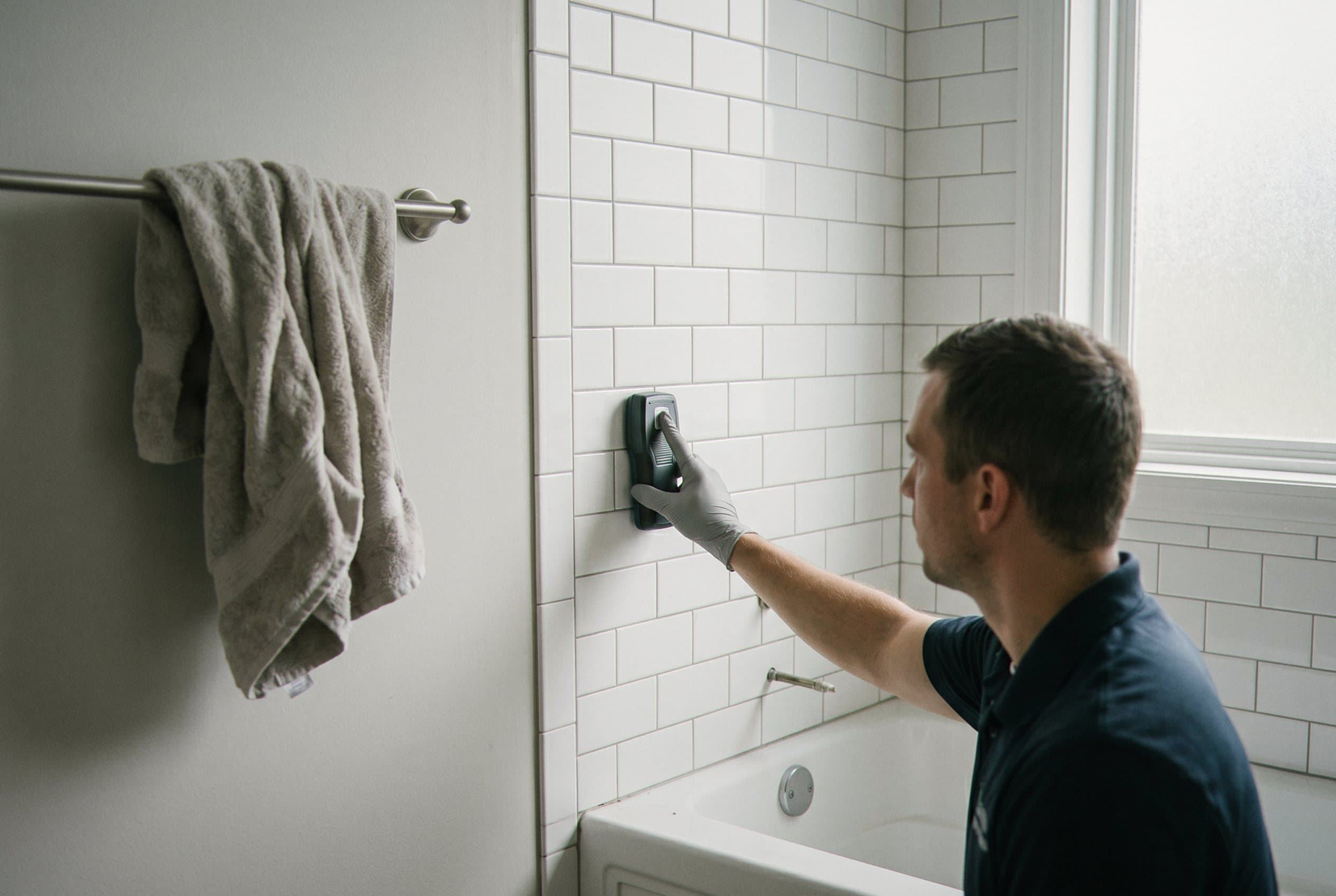
Technician tracing leak source with equipment
Marked detected pipe leak exact location point
What about the alternatives?

Ways people go after a leak they cannot see

A hidden leak puts a few choices in front of you, and they do not all end the same way. Here is a plain read on each one, and what it tends to leave behind in a Warren home.

Have our crew find the leak, then dry what it soaked

We pin the source to one spot, show you the photos, and mark it so the repair opens the smallest hole it can. Then we meter the walls and the subfloor and run drying gear until those readings match a dry part of your house. It is the one route that closes the whole loop.

Recommended

Send a plumber straight out to open the likely wall

A plumber is the right hand for the repair itself, and we work alongside the trade all the time. Sent in blind though, the guess is only as good as the stain on the ceiling. Water travels along joists, so the wet drywall often sits rooms away from the pipe that failed.

Acceptable

Shut the main and read your meter yourself

This is a solid first move, and we tell people to try it while they wait on us. If the dial keeps creeping with every fixture off, water is going somewhere it should not. What it cannot tell you is where, or whether the trouble sits in a supply line or a drain.

Acceptable

Buy a moisture meter at the store and hunt for the wet spot

A cheap meter does find damp drywall, so you learn something real. The catch is that damp drywall is the end of the trail and not the start of it. Reading it without a thermal camera or a listening head sends plenty of owners cutting into the wrong side of a room.

Acceptable

Cut open drywall in a few likely places and look

Every hole is a repair you now owe on top of the leak itself. We have walked into homes with five open squares of drywall and the pipe still dripping quietly behind the sixth. Find it first, then open one hole in the right place.

Skip

Wait and see whether the stain grows

The stain always grows. While you watch it, the framing behind it stays soaked, and mold can take hold in a closed Warren basement within a couple of days. A slow leak never gets smaller or simpler by sitting there.

Skip
How it goes

From quote to walk-on, fast.

01

Rapid Response

Our line is open 24/7, and every water call gets treated as an emergency. We take the details, tell you what to do before we arrive, and get a crew moving toward your Warren address.

02

Assess & Extract

On site we map the moisture with meters and infrared thermal imaging, so we know everywhere the water traveled — not just where it shows. Then pumps and extractors pull the standing water out, lowest points first.

03

Dry & Monitor

Air movers and dehumidifiers dry the structure itself while we log moisture readings every day. The gear stays until the wet areas return to the documented dry standard — not until the floor feels dry.

04

Repair & Restore

With the structure verified dry, we rebuild what the water ruined — drywall, trim, flooring, paint — and hand the room back to you in pre-loss condition, with the full documentation file.

Before you book

Straight answers about finding a hidden leak

Owners ask us the same handful of things before we roll out. Here is where we stand on each one.

Do you have to break the floor open to find it?
No. Finding it and opening it are two different jobs, and we do the finding first. The pressure test, the acoustic heads, and the thermal camera all work through tile, wood, and concrete without a single cut. By the time anything opens, we have marked the spot in paint and shown you why it is there. That usually means one small hole instead of a torn up room.
My water bill jumped but nothing looks wet. Could that still be a leak?
Very often, yes. A pinhole under a slab can push water into the soil for weeks and never reach the surface of your floor. The bill climbs, the water heater runs more than it should, and one strip of tile feels warm to bare feet. Those quiet signs are what we get called on most. We can confirm it with a meter reading and a pressure test in about the time it takes to walk the house.
Can you find a leak under a concrete slab?
Yes, and slab leaks are a big share of what we chase in Warren. Sound carries well through concrete, so a listening head can hear water forcing its way out of a pinhole below the surface. The thermal camera backs that up when the leak sits on a hot line. We cross check both against your plumbing layout, then mark the spot on the floor before anyone reaches for a saw.
How fast can you get to my Warren home?
Usually the same day, and often within a couple of hours of your call. A leak is not a problem that improves while it waits, so we do not treat it like one. Our line stays open at any hour for the calls that come in at two in the morning with water running somewhere behind a wall. Tell us what you are seeing and we will tell you straight when we can be at your door.
Do you fix the leak once you find it, or just point at it?
We handle the water damage side of it from start to finish. That means the search, the marking, the extraction, and the drying of everything the leak soaked. For the pipe repair itself we work with the plumbing trade, and we hand over an exact location so that visit stays short. Then we come back to the moisture readings and stay on them until the structure reads dry.
What happens if you look and there is no leak at all?
It happens, and it is good news worth having. Sometimes a damp corner traces back to sweat on a cold line, a bad seal at a shower pan, or roof water running down inside a wall cavity. We tell you exactly what we found and what we ruled out along the way. You get a clear answer either way, instead of a hole in a wall that nobody needed to open.
Aftercare

How to catch the next leak early

Most of the leaks we trace were sending signals for weeks before anybody called. The habits that catch them are small ones. Read your meter once a month with the house quiet, watch the bill for a jump nobody can explain, and trust your nose when a room smells damp. In a Michigan winter, an unheated crawl space or a garage wall is where a supply line freezes and splits, so those spots earn a look before the cold sets in. Ten minutes a month beats a torn open ceiling in March.

  • Read the water meter with every fixture off, then read it again an hour later
  • Watch the bill month to month and treat a jump you cannot explain as a signal
  • Feel the floor for warm strips, which often mark a hot supply line leaking below
  • Check under sinks, behind the toilet, and around the water heater once a month
  • Keep heat on in rooms with pipes in outside walls through a Warren winter
  • Look at ceilings below bathrooms for faint rings or soft paint that keeps returning
Drywall wet staining from hidden water leak
FAQ

Water Leak Detection Questions, Answered

How fast can you get to my Warren home?
Water damage restoration is an emergency, so we treat every call that way. Once we have your address we load the truck and roll, and most of Warren and the rest of Macomb County is a short drive for our crew. We give you a real arrival window on the phone instead of a vague promise. If the water is still running, we walk you through shutting it off while we drive.
What should I do before the crew arrives?
If you can do it safely, shut the water off at the main valve and kill power to the flooded rooms at the breaker. Move rugs, shoes, boxes, and anything light up off the wet floor. Do not run a shop vac on standing water near a live outlet. Then leave the rest to us.
Do you work with my insurance?
Yes. We document a water damage restoration loss the way adjusters expect it, with moisture readings, photos, and a written scope of what has to be done. We send that packet straight to your carrier and talk them through it if they call. You still own the claim, but you are not building the file by yourself.
Will there be mold?
Mold needs two things, moisture and time. When a structure dries out in the first day or two, growth usually never gets started. We read moisture in the walls, subfloor, and framing every day until those numbers match the dry parts of your house. If we do find growth, we seal the area off and clean it up following EPA guidance.
Is the water contaminated?
That depends on where it came from. A burst pipe or an overflowing tub starts out clean, and a slow roof leak sits somewhere in the middle. Water from a sewer backup or a storm drain is category three, so we work in protective gear with the room sealed off and the air scrubbed. We tell you which category you have before anybody starts pulling material.
Ready when you are

Let's make your next steps easier

Tell us what is going on at your Warren home and we will walk you through the options. One call or one short form is all it takes.

Call (586) 250-0785Make your inquiry
CallContact us